






























How can I choose a good brand of car blower?


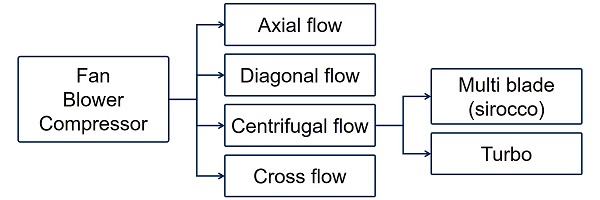
Blower motors are powered machines that create airflow using rotating blades. Similar devices include fans and compressors, and each is categorized based on discharge pressure/suction pressure ratios, with blower motors having a ratio of 1.11 to 1.20*. Blower motors are classified into four types: axial, diagonal, centrifugal, and cross flow.
*Definition by the American Society of Mechanical Engineers (ASME)
History of the blower motor
Historically, one of the very first blowers were the bellows used to supply air during iron smelting. These bellows are mentioned in literatures of ancient Rome and China. Bellows were at first manually operated, then underwent various enhancements over time such as the use of water power, evolving into an efficient means of air suppliment.
In more recent times, new power sources such as steam and electricity led to various developments of other pneumatic (air-driven) equipment. Some examples of applications are air brakes in steam locomotives or the opening and closing of automatic doors.
Nowadays, blowers and compressors are used in various industries, and are built into equipment such as transportation machines, processing or assembly, and packaging equipment. They are also found in products such as computers and home appliances, where they facilitate size reduction and performance enhancement.
Classification of blower motor types
Blower motors (blowers) are classified into four types: axial, diagonal, centrifugal (radial), and cross flow.
Axial flow
Axial flow types have blades that moves air parallel to the shaft on which the blades rotate. The axial flow blower can increase volume of air, and its efficiency is high even with a partial load. Due to its structure it is known to be noisy, and the disadvantage is that you can hear a jarring sound when you turn on the switch. This type of blower is used in a variety of applications, from small ones that are easy to disassemble and carry, to large ones that are extremely powerful.
Diagonal flow
In diagonal flow blowers, the impeller is inclined at a constant angle with respect to its axis of rotation, and air also flows in the same direction. Structurally, it has intermediate characteristics between the centrifugal type and axial flow type, and the operating principle is the same as that of the centrifugal flow type described in below.
Centrifugal flow
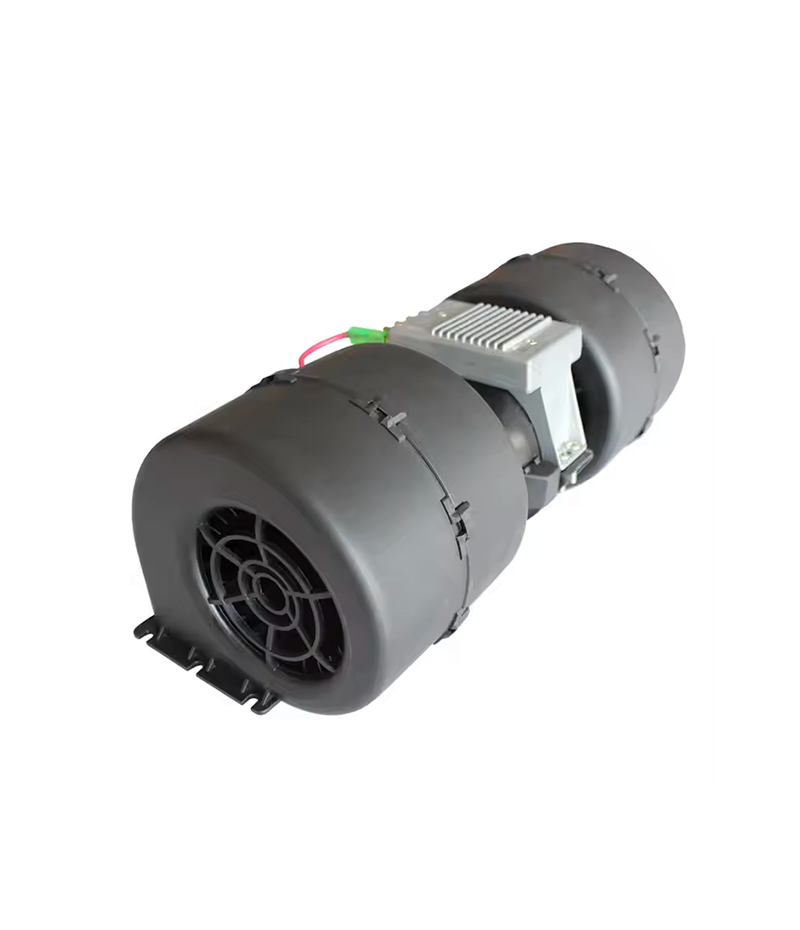
The centrifugal flow blowers use the centrifugal power supplied from the rotation of impellers to increase the kinetic energy of air. When the impellers rotate, the air near the impellers are thrown off from the impellers, then move into the casing. As a result, the kinetic energy of air is measured as pressure because of the resistance offered by the casing and duct. The air is then guided to the exit via outlet ducts. Centrifugal blowers generate more pressure for a given amount of air, used in various purposes such as leaf blowers, hair dryers, and climate control in air handling units. Centrifugal blowers can be classified into two types according to their structure: multi blade (sirocco) type and turbo type.